ORAL CANCER Treatment in Kolkata
Understanding Oral Cancer
Oral Cancer Treatment in Kolkata
Oral cancer refers to cancers that arise from the lips, the anterior two-third part of the tongue, the gums, the inner lining of cheeks (buccal mucosa), the hard palate, and the small area behind the wisdom teeth (retromolar trigone). Majority of the oral cancers are squamous cell carcinoma.
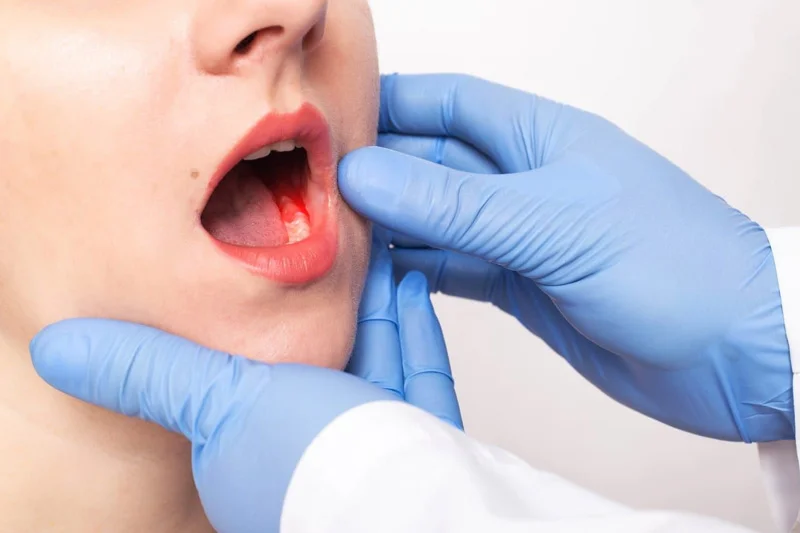
Types of oral cancers
Squamous cell carcinoma
most common type of oral cavity cancer, accounting for majority of the cases. It typically arises from the squamous cells lining the oral cavity.
Oral tongue cancer
This refers to cancers that develop on the front two-thirds of the tongue, which is the part you can stick out of your mouth.
Floor of mouth cancer
This type of cancer forms on the bottom of the mouth beneath the tongue.
Gingival cancer
Cancer of the gums.
Hard palate cancer
Cancer that develops on the roof of the mouth.
Buccal mucosa cancer
Cancer that forms on the inner lining of the cheeks.
Lip cancer
Cancer affecting the lips, which can occur on either the upper or lower lip.
Risk factors for oral cavity cancers include tobacco use (both smoking and smokeless tobacco), excessive alcohol consumption, or both, a diet low in essential minerals and vitamins (fruits and vegetables), chronic irritation from ill-fitting dentures or other dental appliances, and infection with certain strains of human papillomavirus (HPV).
Symptoms may include persistent mouth sores or non-healing ulcers, swelling or lumps in the mouth, pain or difficulty in swallowing, numbness in the mouth or lips, abnormal white or red patches on the gums, tongue, or lining of the mouth with burning sensation while eating spicy food, and changes in voice (hoarseness). Other than this, a swelling or lump in the neck can also be a symptom of oral cancer.
Early detection is crucial for successful oral cavity cancers treatment. Treatment typically involves a combination of surgery, radiation therapy, chemotherapy, and targeted therapy, depending on the stage and location of the cancer. It is therefore important to maintain good oral hygiene and to promptly report any unusual symptoms to a healthcare professional for evaluation.
Educational Videos on Oral Cancer Treatment
FAQs ON Oral Cancer Treatment in Kolkata
Early symptoms include ulcers or sores in the mouth that don’t heal, persistent mouth pain, white or red patches (leukoplakia or erythroplakia), swelling or lumps in the cheek or gums, loose teeth, difficulty chewing or swallowing, or numbness of the tongue or lips. If any of these signs persist for more than two weeks, see a specialist.
Oral cancer is best managed by a Head and Neck Onco Surgeon. At Kolkata Head and Neck Oncology, our expert surgeons specialize in surgical, reconstructive, and multimodal treatment approaches for cancers of the mouth.
Treatment depends on the stage and location of the cancer. Options include:
- Surgery (removal of tumor + margin)
- Neck dissection (removal of lymph nodes)
- Reconstruction (using grafts or flaps for tissue repair)
- Radiation therapy (post-surgery or primary)
- Chemotherapy (often combined with radiation for advanced disease)
Diagnosis typically involves an oral examination, biopsy, imaging tests (CT, MRI, or PET scan), and sometimes ultrasound of the neck nodes. Staging helps determine the tumor size, nodal involvement, and any spread to guide the right treatment plan.
Yes, at Kolkata Head and Neck Oncology, we aim for function-preserving and reconstructive surgery to maintain speech, swallowing, and aesthetics. Microvascular flaps, grafts, and rehabilitation therapies support recovery.
Success depends on early detection, tumor stage, general health, and timely multidisciplinary care. Our personalised approach at Kolkata Head and Neck Oncology is designed to optimize survival, reduce recurrence, and restore quality of life.
You’ll be monitored frequently in the first year (every 2–3 months), then gradually less often. Follow-ups include clinical exams, imaging, and sometimes biopsies to detect recurrence early. Lifestyle modifications and rehabilitation are part of long-term care.
Avoid tobacco in all forms (smoking, chewing), limit alcohol use, maintain oral hygiene, have regular dental check-ups, and avoid excessive sun exposure to lips. Good nutrition and periodic checkups with your specialist also help.